R&D actors in spotlight – ILMARI – Aerosol physics, chemistry and toxicology research unit
The University of Eastern Finland’s ILMARI laboratory infrastructure is a research unit that combines aerosol physics, chemistry, and toxicology. The infrastructure offers extensive opportunities to study the properties of emissions and aerosol particles, their behavior in the atmosphere, and their toxicological effects. The laboratory is equipped with a variety of biomass combustion devices and reactors, dynamometers for engine experiments, and reactors for producing nanoparticles.
“ILMARI is first and foremost a laboratory infrastructure used by several research groups for their own studies. We coordinate its use and ensure that the equipment is available for everyone,” explains Professor Olli Sippula, Director of ILMARI.
A versatile research infrastructure
The laboratory enables exceptionally broad research, ranging from the formation of emissions all the way to their health effects. The unit can produce, measure, and simulate emissions from various combustion processes, such as biomass, traffic, and industrial particles, simulate their interactions in the atmosphere, and expose cells and animal models to these aerosols.
“With the same aerosols we study, we can directly expose cell cultures and examine how the particles affect, for example, the respiratory system or the brain. This is very rare—the entire chain from emission formation to health effects can be controlled within a single infrastructure,” adds Professor Pasi Jalava from the Inhalation Toxicology Laboratory. He is ILMARI’s Deputy Director and, together with his research group, one of ILMARI’s active users.
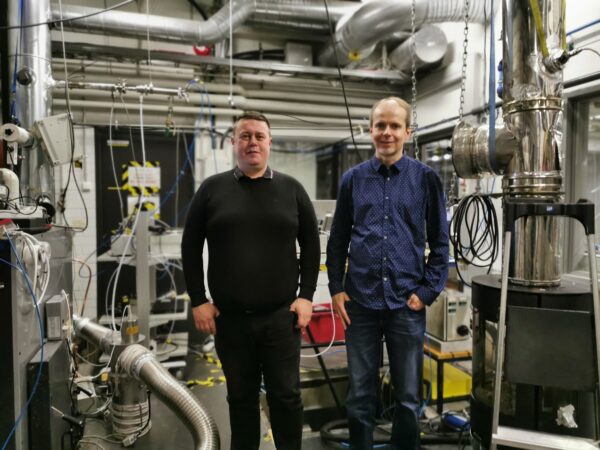
Pasi Jalava (left) and Olli Sippula in the ILMARI laboratory space, featuring several combustion devices.
In recent years, toxicology research has expanded toward topics such as Alzheimer’s disease and other neurological disorders. Additionally, ongoing projects examine the formation of micro- and nanoplastics during combustion processes and their effects on human hormone function and respiratory health.
An internationally unique entity
ILMARI is part of the European ACTRIS research infrastructure, which focuses on aerosols, clouds, and trace gases. The unit has participated in several Horizon 2020 and Horizon Europe projects and collaborates closely with numerous European research institutes and universities, including the University of Rostock, Helmholtz Zentrum, the University of Freiburg, and the Norwegian Institute of Public Health.
“There is no other infrastructure quite like this elsewhere in Europe, perhaps not even globally. Some of the devices are self-designed and built; commercial alternatives simply do not exist,” Sippula says.
Collaboration with companies and research institutes
In addition to serving research groups at the University of Eastern Finland and other universities, ILMARI also supports companies and organizations. Its equipment has been utilized, for example, in studies on purification technologies, fuels, and indoor air quality. Collaborations have included companies such as Tulikivi and Noeton Oy, and the Finnish Meteorological Institute is a significant partner.
“Noeton is actually a startup that originated here. Their soot particle collector captures and burns soot particles formed in fireplaces, improving indoor and breathing air quality. Companies can join projects, test their devices, or order measurements from us. In practice, collaboration often begins with a simple contact, and research needs are then defined together,” Sippula explains.
Cooperation is also carried out with the Finnish Institute for Health and Welfare (THL), the Emergency Services Academy, and several other research institutions. In recent years, projects have examined, for example, worker exposure to carcinogenic substances and developed methods for monitoring workplace exposures.
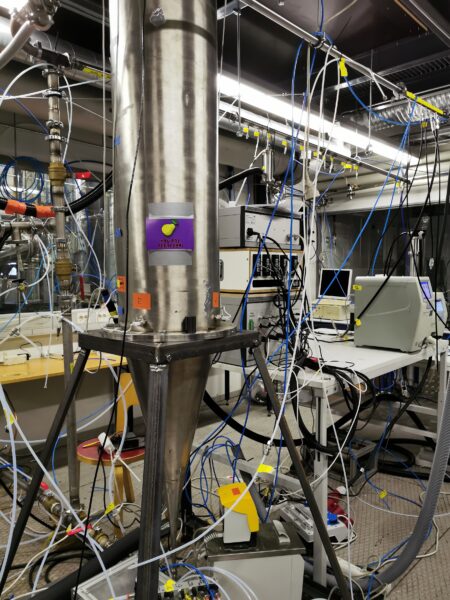
PEAR (Photochemical Emission Aging flow tube Reactor), a photochemical reactor used to simulate atmospheric aging of emissions.
New research directions and future outlook
The focus of research is shifting from combustion processes toward studying changing air quality, wildfires, and circular economy processes. Climate change and the global increase in fire events highlight the need to understand the health effects of these emissions.
“Forest and wildfires have become an important research topic because their impact on air quality and health can offset much of the progress achieved in reducing human-made emissions,” Jalava clarifies.
Key future research themes also include carbon dioxide capture, health effects of nanoparticles, and emissions related to circular economy processes. A pilot environment for studying carbon capture and utilization in biomass boilers is currently being built in connection with ILMARI.
“We have collaborated with Professor Katja Kanninen and Professor Tarja Malm from the A.I. Virtanen Institute (AIVI) in brain research concerning the effects of air pollution on the brain. Kanninen’s research group is involved in the four-year EU project MARKOPOLO, which includes research on the health effects of air pollutants, especially small and ultrafine particles,” Jalava continues.
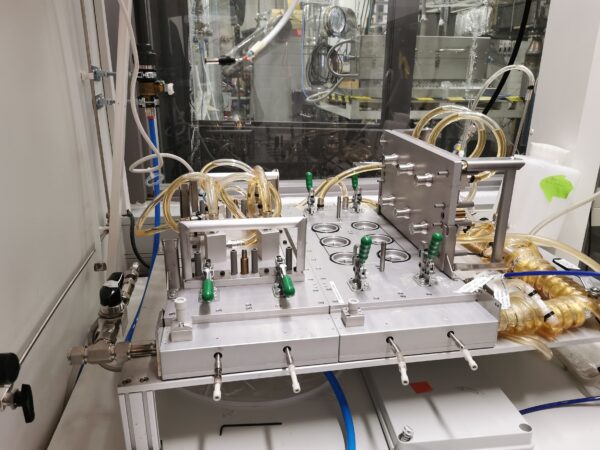
The cell exposure device in ILMARI’s toxicology laboratory, where samples are exposed to particles.
Long history and continuous development
The ILMARI laboratory has operated in its current facilities for about 25 years, and its development has required long-term commitment. Environmental changes and emerging research needs continuously demand equipment upgrades and stable funding.
“The biggest challenge is often maintaining and developing the equipment to meet current research needs. Developing research infrastructures is always a long process”, Sippula explains.
Funding mainly comes from EU projects, the Research Council of Finland, Business Finland, and various foundations, as well as the university’s core funding. Utilization rates are high, and the laboratory is in constant use.
“I feel that the ILMARI laboratory has played a significant role in increasing societal awareness of the links between air quality and health. The unit’s research has provided valuable knowledge, especially on emissions from small-scale wood combustion and their health impacts both in Finland and internationally. At the same time, ILMARI has developed cleaner combustion and purification technologies that companies have taken into practice. The solutions resulting from this research contribute to lower-emission energy production and improved air quality. This is a concrete example of how the work of a research infrastructure can directly affect the environment and human health,” Jalava emphasizes.
Open to collaboration
ILMARI is open to collaboration with researchers and companies seeking to develop or test solutions related to air pollution, indoor air quality, or health effects.
“Companies can feel free to share their needs. If the need fits this infrastructure, we can plan the research or measurement together. At the same time, we can consider how further to develop the equipment and methods for future requirements”, Sippula concludes.
Contact Information:
Olli Sippula, Professor, Department of Environmental and Biological Sciences, Faculty of Science, Forestry and Technology, olli.sippula(at)uef.fi
Pasi Jalava, Professor, Department of Environmental and Biological Sciences, Faculty of Science, Forestry and Technology, pasi.jalava(at)uef.fi
The University of Eastern Finland’s ILMARI laboratory infrastructure (Aerosol physics, chemistry and toxicology research unit) is a nationally and internationally unique research environment that combines the study of atmospheric particles, combustion processes, and their health effects. ILMARI provides state-of-the-art equipment and expertise for the university’s own research groups as well as external collaborators and companies.